

Welcome to HRTech Cube, Nicole; we’re delighted to have you. Could you walk us through your professional journey and the key experiences that led you to your current role as RVP of People & Global Head of Inclusion at monday.com?
I started my career at ADP and stayed there for nine years, primarily supporting engineering teams, which gave me a front-row seat to best-in-class HR at scale.
From there, I moved to Asana, where the focus was on evolving the HR role from a traditional generalist model into a truly strategic HR business partner function. I was drawn to the challenge of elevating HR’s impact — shifting from program execution to influencing business strategy during a critical post-IPO phase.
After that, I served as Head of People at a fintech startup, where I built the HR organization and strategy from the ground up — designing the people infrastructure, operating model, and leadership practices needed to scale a growing business.
Today at monday.com, I serve as Regional Vice President of People for the Americas and Global Head of Inclusion. In my role, I oversee a team of HR business partners, aligning talent strategies with our broader strategic business goals. In addition, I lead the company’s global inclusion efforts, ensuring we’re not just building a diverse organization, but cultivating a genuine culture of belonging where people can thrive and do their best work.
Beyond the hype, what does current data reveal about how teams are actually using AI today, and are certain departments adopting it faster than others?
The reality about how teams are actually using AI today is far more operational than aspirational.
In a recent report we published on AI at work, we found that innovation doesn’t actually crack the top reasons leaders are using AI. They’re motivated by speed (59%), accuracy (56%), and productivity (53%), and AI is increasingly becoming embedded into everyday workflows.
Adoption confidence also varies by function. 70% of IT leaders say they know a lot about AI, compared to 41% of non-IT leaders, which reflects how proximity to systems and data accelerates fluency. CRM is another stronghold, with 3 in 5 directors reporting extensive AI use in CRM-related tasks.
Adoption also differs by industry. Sectors like healthcare and manufacturing lag behind, largely due to heightened privacy, compliance, and operational risk concerns.
But the throughline is consistent: teams aren’t just experimenting with AI. They’re using it to handle the repetitive work, reduce friction, and keep pace with growing demands. It’s becoming a requirement of how work gets done.
Beyond efficiency, how do you see AI fundamentally reshaping organizational culture and workflows, particularly regarding cross-functional collaboration?
One of the biggest misconceptions about AI is that it sidelines people. What we’re actually seeing is the opposite.
AI doesn’t remove people from the equation; it moves them closer to the decisions that matter. AI users aren’t stepping aside; they’re stepping up. Compared to non-users, they’re more likely to prioritize strategic work, such as managing resources and delivering reports and analytics. They’re also more involved in senior leadership reporting and cross-company collaboration.
When AI handles execution, people move closer to the decision-making process. That shifts culture from task management to strategic contribution, and that’s where the real transformation happens.
As a leader at the intersection of People and Inclusion, what is your personal strategy for integrating AI at monday.com to ensure new tools support rather than detract from your culture?
For me, it starts with one core question: Does this make work more meaningful for our people? If the answer is no, it’s not the right implementation.
I don’t see AI as a technology initiative – I see it as a cultural one. Because I sit at the intersection of people and inclusion, I’m always thinking about belonging. Are we giving everyone access to these tools? Are we creating psychological safety so people don’t feel judged for using AI? Are we making sure adoption doesn’t advantage one group over another? Inclusion has to be embedded into the rollout, not layered on after.
And finally, I think a lot about transparency. I’m very open about the fact that AI will change jobs. That honesty matters. But change doesn’t have to feel threatening if people understand the path forward and see opportunity in it. Culture isn’t protected by avoiding change; it’s protected by how you lead people through it..
As AI becomes embedded in day-to-day operations, what are the top three priorities HR leaders should focus on to ensure successful adoption?
1. Enablement – Equip employees to use AI tools effectively.
You can’t just roll out AI and expect transformation. People need space (and permission) to experiment. At monday, initiatives like our AI upskilling programs and AI Month create structured, company-wide opportunities for employees to test ideas, solve real business challenges, and share what works. That hands-on experience builds skills and capabilities, which ultimately allow teams to operate at a higher level.
2. Workforce Planning – Anticipate which roles will evolve and plan accordingly.
The best HR leaders are thinking years ahead. If AI can handle execution and repetitive tasks, then leaders need to proactively redefine roles so people spend more time on strategy. The question isn’t “What goes away?” It’s “What should our people be doing instead?”
3. Operational redesign – Using AI to reduce redundant manual work and make managers’ experiences easier.
AI shouldn’t simply accelerate busywork. It should remove friction from the system.
When automation reduces repetitive tasks and manual coordination, it gives managers and teams back time. That space can then be redirected toward stronger decision-making, more thoughtful development conversations, and clearer business alignment.
AI shouldn’t make us faster at low-value work; it should change what we consider high-value work in the first place.
How can executives lead AI adoption in a way that empowers employees and sparks curiosity rather than creating anxiety about their roles?
Leaders set the tone. If AI is introduced as a cost-saving mechanism, people will naturally feel uneasy. If it’s framed as a tool to elevate work, it creates energy.
I’m very clear that AI will change how we work, and that’s not a bad thing. It creates opportunities for different kinds of contributions. For example, one HR business partner on my team historically spends about 50% of her time on performance management administration. If we implement algorithm-driven systems that streamline documentation, that time can shift toward coaching leaders, strengthening talent strategy, and advising the business at a higher level.
I also encourage my team to experiment with AI regularly. The more they use it, the more fluent they become. When people see that AI can help them operate more strategically, curiosity replaces hesitation.
People feel empowered when they understand what’s changing and how they fit into it. If they can see how their role can grow and expand, AI feels like an opportunity.
As AI automates routine tasks, how do you anticipate employee expectations regarding “meaningful work” will shift, and how should organizations prepare?
AI changes culture and workflows in a few very real ways, starting with the fact that adoption isn’t just about speed, it’s also about how work moves across teams.
AI is increasingly embedded into daily workflows: according to our report, 94% of directors use AI at work, and for over half, AI is embedded in at least 50% of their department’s workflows. That normalizes AI as part of “how work gets done.”
But as AI automates routine tasks, expectations around meaningful work are shifting. The distinction that matters is this: AI handles scale, humans handle context. AI can process vast amounts of information and execute repetitive workflows quickly, but people are needed to interpret nuance, apply judgment, navigate ambiguity, and make values-based decisions.
AI is also changing who does what, with ripple effects on collaboration. Our report suggests AI users aren’t stepping aside, they’re stepping up into more strategic work, with even greater involvement from senior leadership and cross-company collaboration. That aligns with how I think about the future: less manual work, more meaningful work, and more time for leaders and teams to collaborate on decisions that actually require human judgment.
Given your focus on Inclusion, what steps should leaders take to ensure AI adoption is equitable and prevents the amplification of bias in internal workflows?
Inclusion has to be intentional and embedded in how we operate. Leaders should design for equity from the start, involve diverse stakeholders, and regularly audit outcomes for bias. AI should inform decisions, not replace human accountability. It’s also critical to ensure equitable access to training and tools so adoption itself doesn’t create gaps.
Importantly, AI can also be part of the solution. When thoughtfully designed and trained to detect patterns and reduce bias, it can help identify inequities, flag inconsistencies, and create more objective decision-making. Ultimately, this is about protecting fair opportunities, fair treatment, and ensuring people can bring their whole selves to work — globally and locally.
What is your personal advice for other HR leaders who are struggling to balance the “human touch” with the efficiency of AI?
My advice to HR leaders is to embrace it. AI is here to help us step up not step aside, AI is our strategic partner. We use AI to stress-test our logic, accelerate data analysis, improve decision quality, and reduce manual friction. That gives us back time for the work that actually moves ARR: talent strategy, org design, leadership effectiveness, and culture. AI cannot replace our ability to read the room, sense unspoken feelings, or provide the authentic empathy and intuition that defines our partnership.
The role of HR will look different, the opportunity isn’t to preserve every responsibility we’ve historically owned. It’s to elevate the profession and future-proof it for what work demands next.
Finally, what key takeaway would you like to leave our audience with regarding the future partnership between humans and AI?
My biggest takeaway is this: AI should elevate people and expand human potential.
It’s becoming part of how everyday work gets done. When AI takes on repetitive tasks, it gives people more space to think critically, build relationships, solve complex problems, and make better decisions.
The future partnership between humans and AI isn’t about competition. It’s about collaboration. The companies that get this right will use AI to raise the level of contribution across their teams, not just to move faster, but to work smarter and more meaningfully.

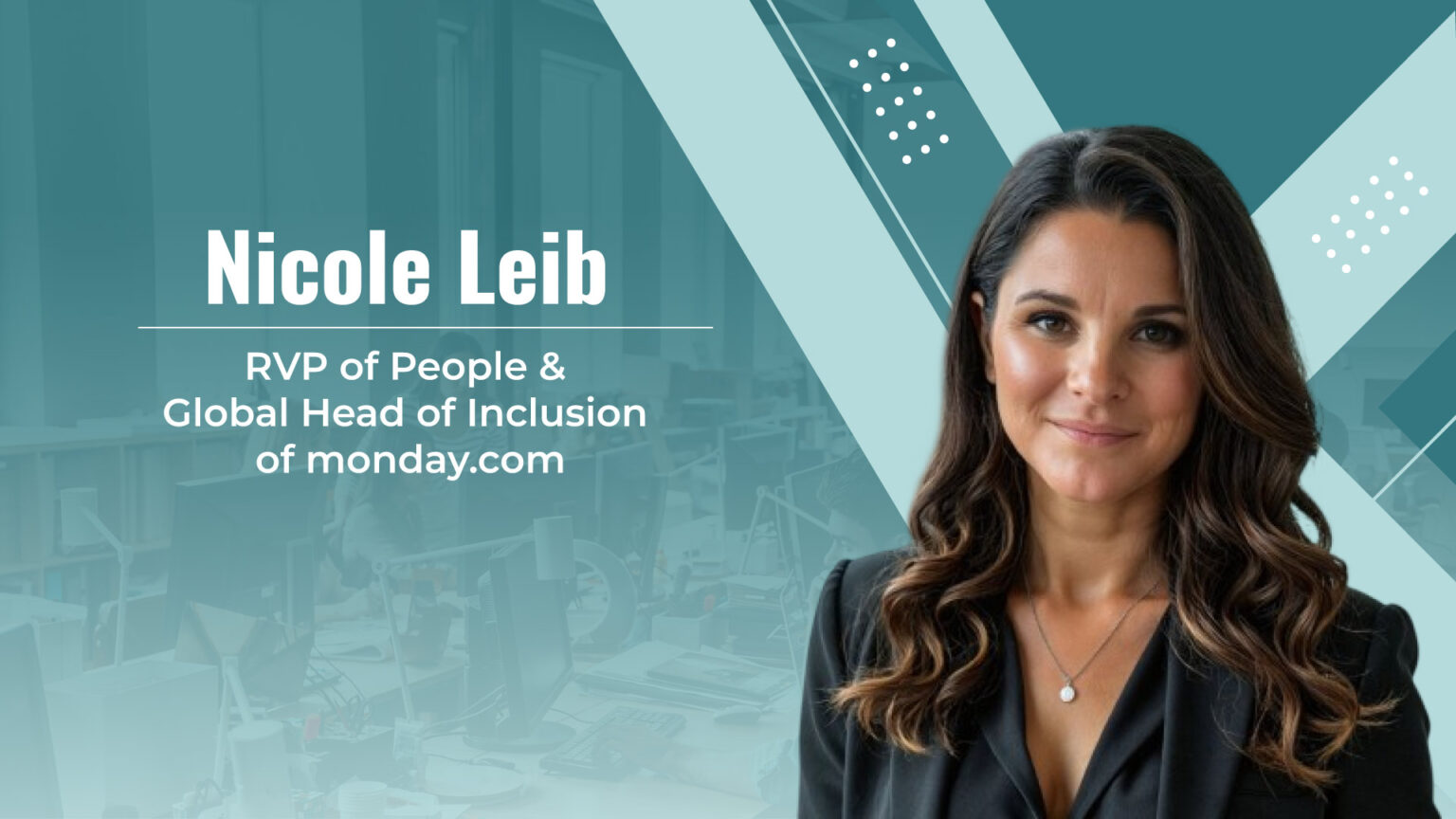
Nicole Leib, RVP of People & Global Head of Inclusion at monday.com
Nicole Leib is the Regional Vice President of People for the Americas and Global Head of Inclusion at monday.com. She brings more than a decade of experience scaling people functions across global organizations. Nicole began her career at ADP, where she spent nine years supporting engineering teams within a 60,000-person organization. She later helped develop and scale teams at Asana post-IPO and served as Head of People at a fintech startup before joining monday.com.