
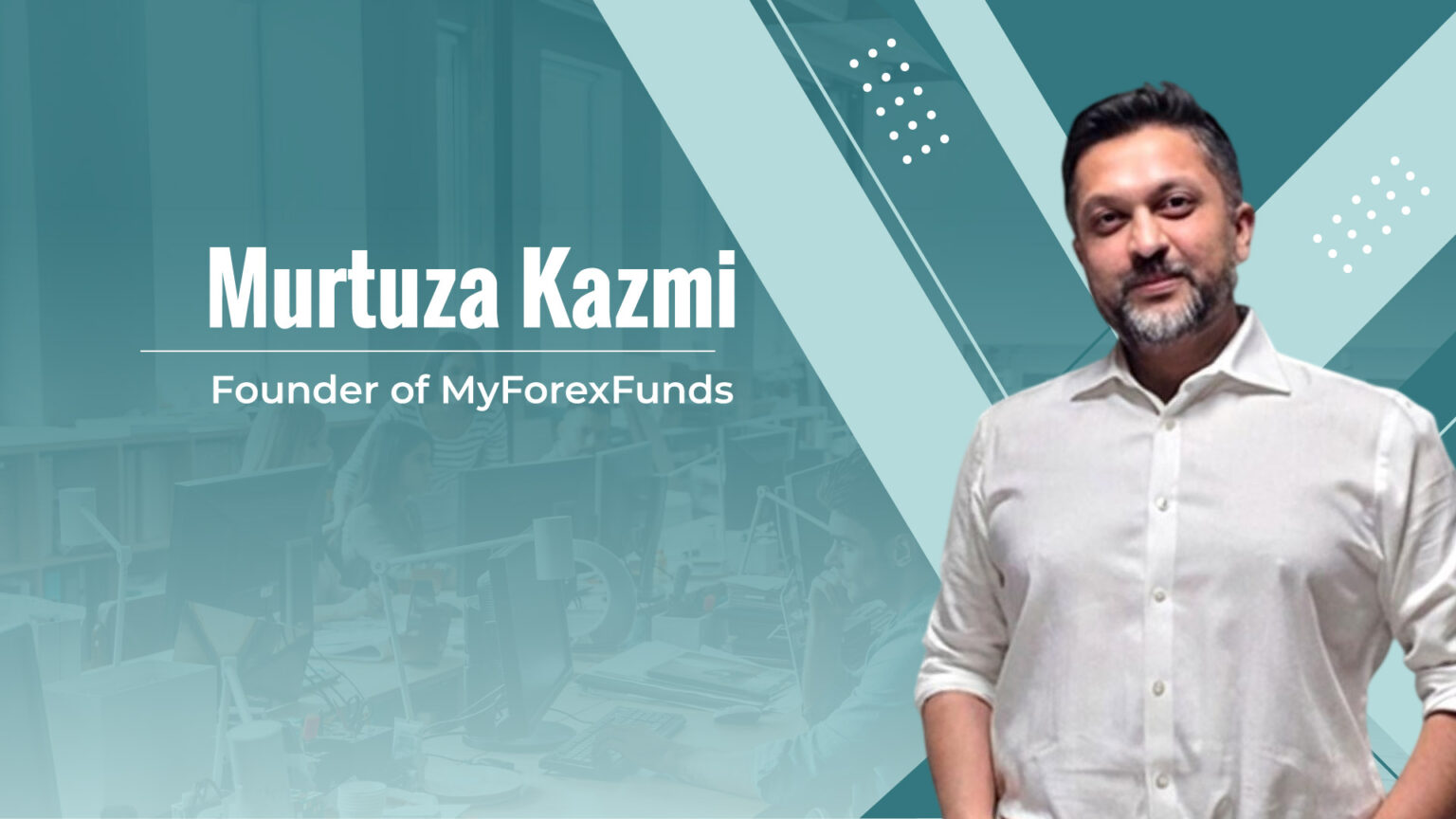

Welcome to HRTech Cube, Murtuza, we’re delighted to have you. To start, can you tell us a bit about your journey and what led you to building MyForexFunds?
My journey started in trading, but over time, it became much bigger than trading itself. I was always interested in systems, structure, and performance—not only in the market, but also in how people and organizations operate under pressure and at scale.
When I built MyForexFunds, the original idea was to create a platform where traders could prove skill and discipline in a structured environment. But as the company grew, what became just as important was the team and culture behind that platform. We were not only building technology and operations. We were building a modern global company with a shared mission.
That mission mattered. It helped MyForexFunds grow into one of the largest and most reputable prop trading firms in the world. A big reason for that was not just the business model, but the fact that the staff truly believed in what we were building. There was a real sense that we were helping people create opportunity for themselves. That belief shaped the internal culture, and in turn, the external reputation. Over time, MFF became much more than a company. It became a community that people felt connected to.
Many people assume going global just means hiring remotely. From your experience, why is it more complex than that?
Because hiring is only the front door. The real challenge begins after people join.
A lot of companies think going global is mainly about access to talent. In reality, what matters much more is whether the business has the structure and culture to support that talent once it is distributed across time zones and jurisdictions.
MyForexFunds reached more than 160 staff members across three continents and roughly 20 countries. Canada anchors leadership, finance, tax, and compliance. Greece plays a major role in trade operations, risk, and platform technology. Pakistan and Dubai support critical operational functions, while customer-facing and support capabilities extend more broadly around the world.
The complexity comes from making sure all of those people can execute consistently, learn quickly, and stay aligned with the same goals. That requires far more than remote access. It requires shared standards, a strong internal rhythm, and leadership that knows how to create real buy-in across borders.
How would you explain the difference between a remote team and a truly global organization?
A remote team is a staffing model. A truly global organization is an execution model.
The difference is whether the company has been designed to operate across regions in a coordinated way. Remote teams can still function in silos. A global organization cannot afford to.
Here, each major region has a clear role. But what made that successful is not just structure. It’s the culture. We work very hard to make sure people do not feel like they belong only to a department or a region. They are part of the company as a whole. That is one of the reasons the company became so loved by the prop trading community. Internally, the workforce feels like a family.
That kind of culture is difficult to build even in one office. Building it across borders in a remote environment takes real intention.
What are some of the day to day challenges that come with managing teams across countries and time zones?
One of the biggest day-to-day challenges is maintaining momentum without over-relying on live interaction.
In a single-office company, people can solve a lot informally. In a global organization, that breaks down very quickly. If the business depends too heavily on meetings, constant messaging, or real-time approvals, execution starts to slow down.
The practical challenge becomes building a company where decisions are documented, responsibilities are obvious, and work can move from one region to another without confusion. At MyForexFunds, that is especially important because different parts of the company carry very different functions, from governance and compliance to platform operations, risk management, and customer support.
At the same time, the human side cannot be ignored. A company can be operationally efficient and still feel disconnected. So part of the daily work of leadership is making sure people still feel seen, included, and connected to the larger mission. That is something we care about deeply, and I believe it plays a major role in why the company developed such a strong internal and external reputation.
When teams operate across different jurisdictions, what do leaders need to think about differently?
Leaders need to become much more deliberate.
Different jurisdictions bring legal, cultural, and operational differences. If leadership ignores those differences, the company becomes disconnected. If leadership overreacts to them, the company loses consistency.
The balance is to create one clear operating philosophy across the company while giving teams enough room to execute effectively within their local environment. For us, that means making sure standards, expectations, and decision-making frameworks stay consistent, while recognizing that people in different regions may work through those frameworks differently.
Leadership in a global company is not only about process. It is also about vision. People across countries need to understand what the company is trying to build and why their role matters. If they buy into the vision, they stop acting like isolated workforce members and start acting like builders of the same organization. That is when culture starts to travel across borders.
When companies start scaling internationally, what do they usually underestimate?
They usually underestimate the management load and the cultural load.
Many founders think scale is mostly about more hiring, better tools, or broader reach. What gets underestimated is how much pressure international growth puts on managers, onboarding, communication, training, and culture.
At a certain point, growth exposes every weak process. If managers are inconsistent, that becomes visible quickly. If onboarding is weak, standards drift. If responsibilities are not clearly defined, teams begin to overlap or drop things altogether.
But beyond that, companies underestimate how hard it is to preserve a sense of identity as they grow. At MyForexFunds, one of the things we are proudest of is that the company feels personal even when it scaled globally. Staff, leadership, and customers know each other by name. That kind of trust and connection does not happen by accident. It comes from repeated effort, strong values, and a culture that people genuinely believe in.
As platforms grow globally, what kind of systems and support need to be in place to keep things running smoothly?
You need systems that support both scale and consistency.
That includes technical systems, of course—infrastructure, tooling, analytics, access controls, and incident ownership—but it also includes workforce systems: onboarding, knowledge management, service workflows, escalation paths, manager training, and clear operational scorecards.
We learned that fast platform growth has to be matched by organizational maturity.
But systems alone are not enough. The support structure has to reinforce a culture that people want to be part of. We work hard to create an environment where people feel they are building something meaningful together. That translates into how teams collaborate internally and how traders experience the company externally. In many ways, our operating culture became part of the product.
How do you keep teams aligned, accountable, and connected when they are spread across the world?
You build alignment into the operating system, and you reinforce it through culture.
Alignment does not come from motivation alone. It comes from visible priorities, shared scorecards, clear owners, and regular management rhythm. Accountability does not come from monitoring. It comes from measurable expectations and well-defined outputs. Connection comes from consistency in leadership and culture.
I found that distributed teams stay strongest when people understand not only their own role, but how their role connects to the bigger business. That requires communication, yes, but also good organizational design.
At the same time, culture matters enormously. We built a company where staff and customers often feel part of the same wider family. That level of connection is unusual in a remote global setting. People are not only aligned on tasks. They are aligned on purpose.
On a personal level, what is your approach to leading across cultures and geographies?
I try to lead in a way that is clear, steady, and respectful.
Across cultures and geographies, people may communicate differently, but they respond well to the same core things: fairness, consistency, respect, and trust. I have found that if expectations are clear and leadership is stable, teams can work extremely well across very different environments.
I also believe in designing around strengths. Not every region contributes in the same way, and that is okay. A global company becomes stronger when it knows how to use regional strengths without compromising consistency across the business.
Personally, I have always tried to share the vision clearly enough that people can see themselves in it. Once people believe in what the company is trying to build, leadership becomes less about pushing and more about guiding. That is especially important across cultures and borders, where the company cannot rely on physical proximity to create loyalty or engagement.
Finally, what advice would you share with leaders building global teams today, and any closing thoughts for our readers?
My main advice would be to treat workforce design as seriously as product design.
A global organization does not become effective by accident. It becomes effective when leaders invest in structure early—training, onboarding, documentation, manager quality, role clarity, and decision-making systems. If those things are weak, international growth will expose them very quickly.
I would also say that culture in a global company has to be built intentionally. It has to be repeatable, understandable, and reflected in daily operations. It cannot just live in slogans or values on a website.
And finally, I believe one of the biggest opportunities for modern businesses is to combine strong systems with strong human connection. MyForexFunds works because it is not only scaling a platform. We are building a shared identity. That helped us become one of the most recognized and respected names in the prop trading industry. In a world where teams are increasingly distributed, that kind of connection is not optional. It is a real competitive advantage.
Global hiring creates access. But what makes a company exceptional is turning that workforce into one aligned system with a shared culture, shared standards, and shared belief in what it is building.
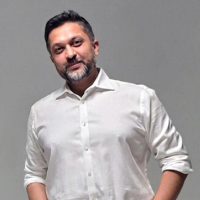
Murtuza Kazmi, Founder of MyForexFunds
Murtuza Kazmi is the Founder of MyForexFunds, one of the most recognized and reputable proprietary trading firms in the world. By combining strong operating discipline, regional specialization, and a deeply connected internal culture, MyForexFunds grew into a modern global organization that was widely respected across the prop trading industry. Murtuza writes and speaks on leadership, workforce management, operating systems, organizational culture, and the role of AI in scaling complex international businesses.