

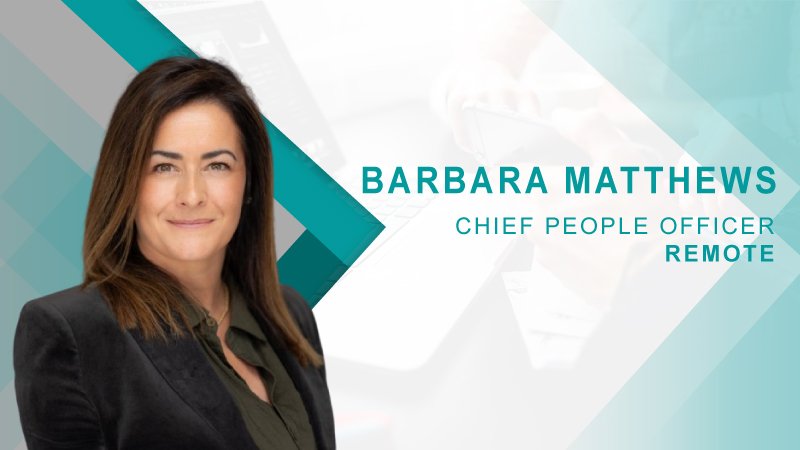
Barbara, thanks for joining us. To start off, can you please walk us through your career journey—what led you to champion the shift toward skills-based hiring?
I began my career as an HR assistant and staff trainer in the Retail sector in Ireland, then moved into Google starting in recruitment that taught me the fundamentals of people operations. I spent over 12 years at Google in strategic HR positions across EMEA and globally, leading programs in career development, recognition, compensation, and performance for the sales organization and ending my time there in a Business Partner role. At Stripe, I built the HR function across EMEA and APAC, helping grow the company in new markets and shaping its culture through programs in performance, benefits, L&D, and engagement. Now as Remote’s CPO, I focus on building high-performing, globally distributed teams. I advocate for skills-based hiring because I’ve seen how many top performers come from non-traditional backgrounds. Degrees alone can overlook exceptional talent, while a skills-first approach creates more inclusive, adaptable teams.
You’ve highlighted that the pace of AI advancement is outstripping formal education. How do you see this impacting the future of workforce readiness?
Already AI is elevating career opportunities for people with non-traditional backgrounds, limited formal education, or non-native language skills by enabling them to participate in more white-collar jobs than ever before. That means someone without a formal degree or years of relevant experience can “do more” by using AI. Companies should pay attention for two reasons. First, it dramatically expands the talent pool. Candidates with strong critical thinking skills and the ability to ask the right questions can bring fresh perspectives without sacrificing results. In fact, they can often be more desirable because they’re primed to think outside the box. Second, the talent pipeline itself is shifting. Formal education is becoming increasingly expensive, and fields once considered reliable paths to high-paying jobs , like computer engineering, are facing significant automation at the entry level. AI will reshape what many jobs look like today, but those who learn how to use it strategically and maintain a growth mindset will have the advantage – same as the companies that hire them.
With AI literacy becoming a core skill, why do you think traditional degree programs are struggling to keep up—and how should companies respond?
Universities are currently lagging at future-proofing graduates with the AI literacy skills many jobs now require because the development of new technology outpaces the speed of traditional education rapidly. That is why self-taught, independent learners working with AI tools on the ground may be stronger candidates for a particular role than those who studied those same subjects in school. Dropping degree requirements is actually a great thing for businesses. It expands the talent pool, allows for faster hiring, and brings individuals with hard-to-find skills to the table who would have otherwise been overlooked. Harvard research found that in companies using skills-based hiring effectively, non-degree hires stayed longer — with retention rates 10% higher than their degree-holding colleagues. This way of hiring is better for candidates too, especially those who’ve been shut out by systemic barriers. Across the globe, access to university is heavily shaped by race, income, language, and location. Talent is everywhere, but opportunity often isn’t. A formal degree doesn’t guarantee talent, skill, or success, yet companies are still clinging to outdated degree requirements and are missing out on exceptional candidates who’ve built their expertise outside traditional paths.
You’ve made a strong case for skills-based hiring. What do you believe is the biggest misconception employers still have about candidates without formal degrees?
That a degree is the only reliable evidence that someone will be competent and successful in their career. In reality, many of the most capable candidates have built their skills outside of traditional education, whether that be through self-teaching, hands-on experience such as internships or fellowships, online courses, and more. These individuals are often more agile and up-to-date with current tools and trends in their given field, and are deeply motivated by true passion rather than curriculum requirements. It’s also worth noting that a large percentage of university graduates end up working in a different field than what they studied. A recent LinkedIn study found that only about 27-40% of graduates work in jobs directly related to their degree 10 years after graduating. That means the skills needed to transition to these new careers were learned outside the classroom.
Remote has embraced a values-based and capability-driven hiring model. Can you share how that practically plays out in your hiring process?
At Remote, the way we access and hire prospective candidates is driven by our values (Care, Innovation, Transparency, Intensity, and Excellence) – because that’s how we work together as a team successfully. We seek individuals who are curious in their work, can take ownership and initiative proactively, give and receive feedback with clarity and openness, and aren’t afraid to go outside of their comfort zone. Capability is also a key component of our hiring process. We look at how candidates problem-solve, collaborate, and learn new things. Education credentials don’t say much about how well a person can adapt to change – hard skills are the better gamble. We prioritize hiring based on how people think and how they’re already using the latest technology and other tools to innovate, rather than focusing on what they studied in school.
What kinds of real-world skills or traits are you prioritizing today when hiring for roles involving emerging tech, like AI?
In addition to prioritizing the hard skills associated with the given job, we look deeply into the candidate’s ability to adapt, continuously learn, and problem solve. The tech industry is evolving at such a rapid pace, and specific tools, systems, and frameworks may become outdated quickly. The ability to learn on the job, apply critical thinking, and willingness to experiment with new technologies is essential in these types of roles. We also look for candidates who demonstrate strong communication and collaboration skills. AI impacts teams, customers, and business outcomes – so we want people who have the ability to explain complex ideas clearly. Finally, a sense of curiosity is a must for every role. We want to hire individuals who are passionate about their work, and are committed to delivering strong results.
On a personal level, what’s one strategy you use to evaluate whether a candidate is truly adaptable and ready for change—especially in fast-moving industries?
**Note: This is not something that Barbara has explicitly said – but seems like a strategy that would be used to evaluate a candidate’s adaptability.
One strategy I use to assess a candidate’s adaptability is asking them to walk me through a time where they had to learn something completely new quickly, and how they approached the situation. The key to this strategy is not just hearing about what new thing they had to learn, but the steps they took to tackle the uncertainty. Did they seek out resources proactively on their own? Did they ask great questions to arrive at the solution? Were they able to stay calm under the pressure? Do they show self awareness, humility, resilience, and a growth mindset? All of these factors help to best understand the way a person’s mind works in fast-moving situations. Another strategy is to ask the candidate to teach you something new during the interview process. This exercise demonstrates how quickly the person can think on their feet, how well they explain a new/unfamiliar concept, and the way they move through different steps to achieve the desired end result.
What advice would you give to companies still relying on traditional credential filters, even in roles where skills clearly outweigh diplomas?
Don’t let outdated degree filters stop you from hiring candidates who have the skills, qualifications, and drive to excel at your company. Defaulting to traditional credentials as a requirement often screens out exactly the kind of people you need most: those who are self-taught, adaptable, and highly skilled through real-world experience. Harvard Business School and the Burning Glass Institute found that degree mentions are disappearing from job ads; between 2014-2023, the number of open job roles without degree requirements increased almost four times over. Employers like IBM, Walmart, Google, and several U.S. state governments have dropped degree requirements from select roles. The takeaway: skills-based hiring isn’t just a trend – it’s a competitive advantage. The companies leading the future of work recognize that talent is more than what’s written on paper, and those that don’t adopt a similar mindset risk losing out on great candidates.
Beyond dropping degree requirements in job descriptions, what deeper changes should companies make to truly embrace inclusive, skills-first hiring?
Companies need to rethink their approach to talent acquisition entirely, from how they source candidates to how they assess, onboard, and develop them internally. That starts with redesigning job descriptions to clearly set expectations from the outset of the hiring process. At Remote, this is what we call a “no surprises” culture. We take pride in our transparent sourcing and interview process. Open communication between recruiters and candidates is a top priority, and each job listing on our Careers page lays out exactly what job seekers can expect. Postings are descriptive and detailed, including who candidates will speak to, what topics will be discussed, how many steps are involved in the hiring process, and how long before a decision is made. We are also upfront about benefits, salary, and more. Finally, it’s important for the interview process to accurately reflect what success looks like in the given role beyond a checklist of qualifications. We invest time into practical, skills-based assessments by assigning candidates real-world tasks, giving them a fair shot at demonstrating their capabilities beyond the resume.
And finally, what’s one message you want business leaders to take away about preparing teams—and hiring practices—for the future of work?
The future of work goes far beyond titles, years of experience, and degrees. In the modern workplace, it’s about being adaptable, infinitely curious, and having the real-world skills to get the job done well. Business leaders need to shift their focus to the potential of non-traditional, skilled workers and away from the stigma of those lacking formal credentials. It’s crucial to invest in continuous learning and upskilling to help retain employees and prepare them for the rapidly evolving demands of the workforce.