


Welcome to HRTech Cube, we’re delighted to have you. To begin, can you share your professional journey and what led you to your current role as Vice President of Strategy at Businessolver?
I have spent more than a decade in employee experience and health tech, holding product marketing and go-to-market leadership roles. This has meant working closely with product, marketing, sales, and user experience teams to translate complex solutions into clear value for the market.
During my career, I have had the privilege to launch new products, expand into new markets, and strengthen brand loyalty through human-centered storytelling. I love telling meaningful stories, and it began the moment I stepped foot onto the campus at Arizona State to complete my degree at the Walter Cronkite School of Journalism.
At Businessolver, I shape our go-to-market strategy, which is rooted in innovation that bridges cutting-edge technology and real human needs. It is an incredible opportunity to work with brilliant people to push the limits of what it means for technology to be both smarter and more human, creating benefits tech that truly makes an impact.
Employee benefits decisions often happen during stressful, high-stakes moments for employees. From your perspective, why is the traditional personalization model no longer sufficient in these situations?
In reality, traditional personalization is largely reactive. It waits for an employee to ask a question, click a link, or even make a mistake before it knows how to respond. In high-stress moments—a medical diagnosis, a new child, financial changes—that model doesn’t deliver the kind of support employees really need. They often don’t have the time, emotional bandwidth, or benefits expertise to navigate these complex choices on their own, even if the content is technically personalized.
To be clear, personalization is valuable and a very helpful foundation— but anticipation allows us to be proactive–not reactive–and bring more empathy into benefits administration and delivery. Using a broad dataset to recognize patterns means people can be guided before confusion, financial strain, or missed opportunities happen. But when we use intelligent design, people, and processes, those data sets transform into powerful insights for our clients, their employees, and our own Solvers.
You’ve spoken about the need to move from reacting quickly to helping earlier. How does anticipation fundamentally change the way HR teams should think about supporting employees?
Anticipation shifts HR from managing benefits and complications to creating desired outcomes. Instead of measuring success by how quickly an escalation is resolved, anticipation asks, “How do we prevent this issue from happening at all?”
For HR leaders, that means using predictive insight to guide communications, education, and nudges earlier in the employee journey. Our goal is to enable action before enrollment deadlines are missed, before claims get filed, before benefits costs spiral because of repeat errors. HR leaders don’t want to be bogged down managing issues, they want to focus on strategic goals like retention, productivity, and employee well-being.
Many HR teams are data-rich but insight-poor. What are the biggest challenges organizations face in turning benefits data into immediate, actionable insight?
Benefits data can live in a lot of different places and it’s rarely connected in a way that reveals patterns. Most analytics are descriptive and looking in arrears: what happened last quarter, what people searched for, what tickets were submitted.
What’s missing is context, insight, and proactive connection, and these are the insights that drive anticipation. HR leaders need more clarity on why something is happening and what to do next. Without that, data just isn’t as helpful for critical decision-making.
Anticipatory insights focus on identifying patterns before friction escalates into larger HR issues. Can you share examples of how early signals can prevent confusion, financial stress, or employee escalations?
Healthcare costs and benefits literacy are two big areas where anticipatory insights will have major benefits for both the employer and employee. Let’s say a growing percentage of employees begin searching for GLP-1 medication information. That’s an early signal—not just of interest, but of potential cost impact, confusion around coverage, and potential HR escalations.
Using anticipatory insights, an intelligent benefits system can guide employees toward appropriate benefits and HR teams can proactively launch targeted education campaigns, before misunderstandings turn into stress or upset.
Sofia, Businessolver’s proprietary AI, was designed specifically for the benefits ecosystem. What makes Sofia different from more general AI tools being applied in HR today?
Sofia isn’t a general-purpose AI or chatbot bolted onto HR workflows. Sofia’s proprietary agentic AI intelligence was developed by Businessolver’s in-house team of technical experts that span data scientists, machine learning engineers, and computational linguist specialists. She was purpose-built for the benefits ecosystem and trained on millions of real employee interactions.
That specialization matters. Benefits decisions require precision, empathy, and timing and Sofia deeply understands this world. She can orchestrate information across channels to guide people to the right action at the right moment.
Sofia learns from millions of employee interactions. How does this learning translate into predictive insights, dashboards, and automation that help HR teams act faster and with greater confidence?
With that scale of information, Sofia is able to surface patterns that may not be obviously visible or easily derived manually. These are patterns like repeat points of confusion, dead ends in journeys, and early indicators of cost drivers or disengagement. Those insights are translated into dashboards that show HR leaders where issues are likely to emerge next.
This gives HR teams meaningful information for where to best focus targeted communications, micro-education campaigns, or make process changes that reduce mistakes and escalations. These efforts are more impactful because they’re rooted in real data and not guesswork.
From the employee perspective, how does Sofia provide support before confusion hits and help connect benefits decisions more seamlessly with real-life events?
For employees, the goal of anticipation is to draw on the available signals to reduce anxiety and confusion, and prevent avoidable issues. Sofia is capable of proactively guiding employees through decisions in context, and that shows up as “Employees like you often need these benefits,” or “You may be eligible to file this claim,” or “Here’s how this life event affects your coverage.” She can guide employees through documentation, enrollment changes, or claims, and steer them to the easiest channel, like mobile, to reduce friction.
When employees have issues, Sofia is able to resolve more than 90% the same day. She uses plain-language guidance, and routes employees to a human for assistance when necessary.
On a personal level, how do you approach product and user experience strategy when designing technology meant to support people during some of their most stressful life moments?
Our product design starts not with technology, but with empathy. What do our users really need? How do we want them to feel? We look closely at where people get stuck, where anxiety or frustration spikes, and where mistakes tend to happen—and then we design the technology and experience to try and prevent those moments entirely.
As workplace benefits continue to evolve, what final thoughts or advice would you like to leave our readers with about building a more empathetic, proactive, and human-centered benefits experience?
When benefits work better for people, they work better for the business—and anticipation is how we get there. Anticipatory benefits reflect a broader vision for work: technology that listens, learns, and acts meaningfully.

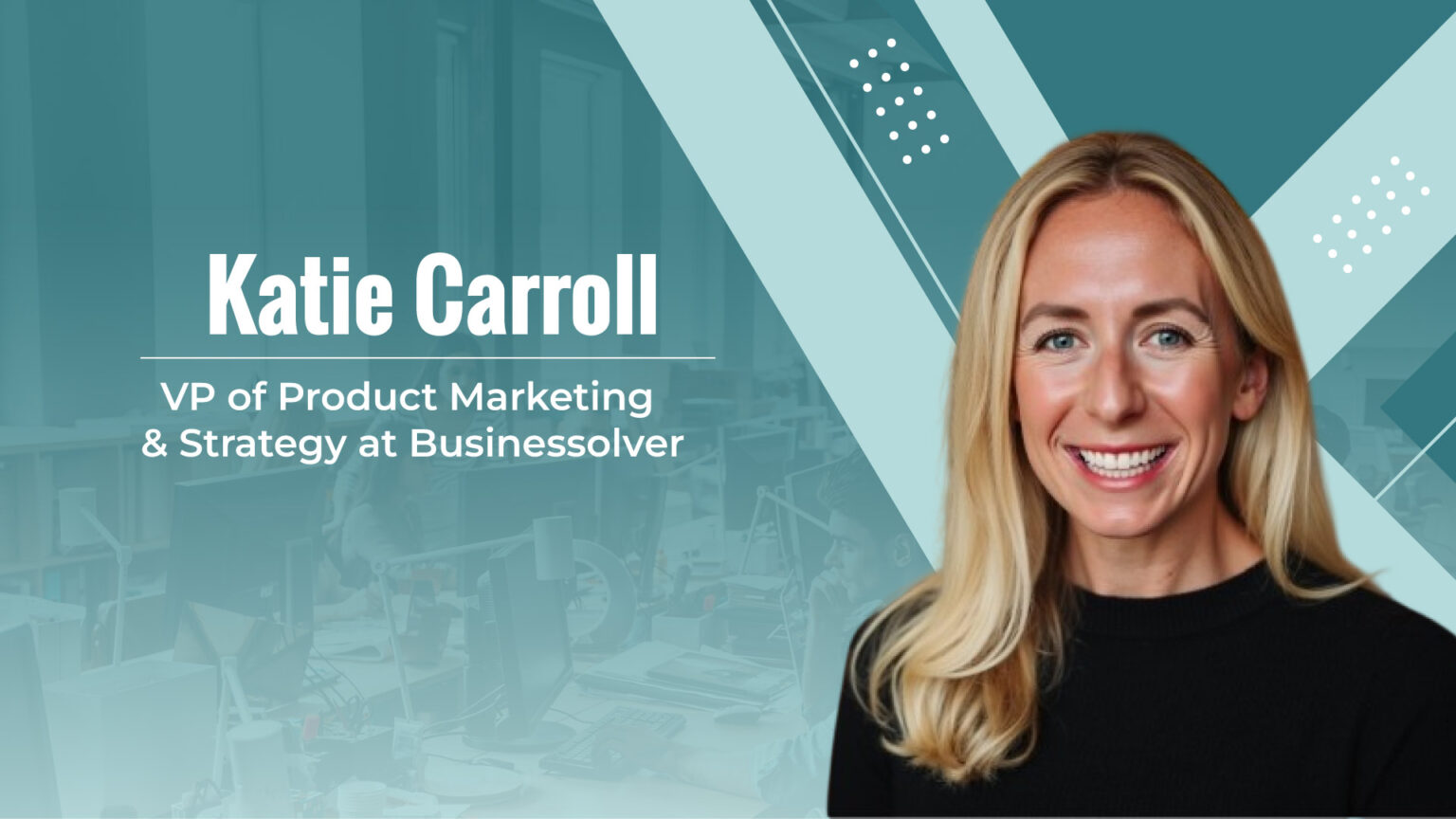
Katie Carroll, Vice President of Product Marketing & Strategy at Businessolver
Katie Carroll is the Vice President of Strategy at Businessolver, an employee benefits technology company advancing a more proactive, connected, and anticipatory benefits experience.