

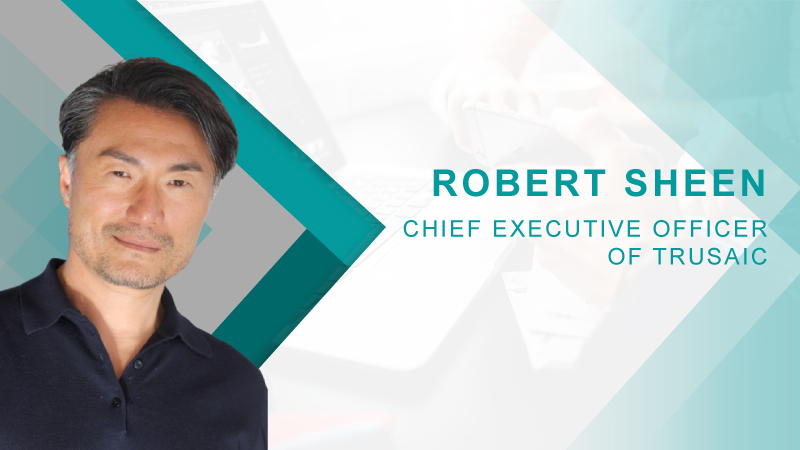

Welcome to HRTech Cube, Robert — we’re delighted to have you. To begin, could you walk us through your professional journey and what led you to founding and leading Trusaic as its CEO?
I began my career as a tax attorney, honing my skills at firms like KPMG and BDO. In those early years, I saw firsthand how fragmented data created massive blind spots for even the largest organizations. In 1999, I founded First Capitol Consulting with a simple but powerful premise: data, when properly harnessed, can solve the most complex regulatory and human challenges.
What started as a way to drive tax savings and compliance evolved into something much more profound. I realized that the same technical rigor we used for financial intelligence could be used to solve one of the most persistent social injustices in the workplace, pay inequity. That realization is the heartbeat of Trusaic. We’ve moved beyond just “managing data”, we are now using it to foster fairness. We’ve built a bridge between sophisticated regulatory expertise and cutting-edge software to ensure that compensation isn’t just a number, but a reflection of true equity.
Today, our mission is to provide global enterprises with the world’s most trusted software to achieve pay equity at scale. We help companies stay compliant and help them build a future where every employee, regardless of who they are or where they work, is valued and compensated fairly. We believe that when you solve for equity, you solve for the future of work.
The European Union Pay Transparency Directive will take effect in June 2026. From your perspective, why is it critical for organizations with employees in the EU to begin preparing now?
This is the most significant piece of workplace compliance legislation that has occurred in the past 50 years. It is a massive undertaking for businesses, as it requires:
- pay transparency before hiring and during employment
- annual reporting of gender pay gaps
- a requirement to justify any pay gaps 5% or higher (via legitimate Wage Influencing Factors) or be subject to a Joint Pay Assessment, which requires the gaps be remediated within six months.
The first bullet takes effect June 2026 across the EU, but is already in effect in some jurisdictions such as Malta and Poland. The first reporting deadline won’t be until June 2027, however, the pay data organizations are required to report is from the year prior. Thus, your gender pay gaps in the second half of 2026 are what you will be required to report in June 2027.
This means you have less than two months remaining to put the necessary processes in place, which are arduous, to comply. Our recommendation is to partner with pay equity software vendors to remove the burden from internal HR/Rewards and Legal teams and ensure you are prepared accordingly.
Trusaic’s recent survey suggests the majority of organizations are not ready for the EUPTD. What were the most surprising or concerning findings, and what do they signal for employers?
The findings themselves were not all that surprising. Rather, it reinforced and highlighted what many in the space were aware of: most organizations do not have sophisticated enough pay equity practices in place that are required to comply with legislation such as the EU Pay Transparency Directive.
From our survey, 50% of respondents said they still rely on basic statistics to conduct their pay equity analysis, and just 37% use multiple regression to conduct their pay equity analysis — the gold standard.
Despite its emergence into the mainstream conscience, pay equity and pay transparency are still relatively nascent concepts for many organizations. We see this with many new clients we bring onboard. They haven’t been ignoring the issue, but they are relying on outdated approaches (like using basic statistics) that are not fit to navigate the modern compliance landscape as well as growing employee expectations of transparency and fairness.
We believe the EUPTD will be a watershed moment for organizations across the globe, as it will force businesses to truly align their pay policies and practices with these modern expectations of pay transparency, as well as ensuring they are meeting “equal pay for equal work or work of equal value” standards.
Many organizations now have to juggle conflicting priorities between U.S. and EU pay equity requirements. How should leaders approach navigating these differing regulatory landscapes?
Having a formalized global pay equity strategy is key. And a best practice is ensuring your foundational approach is aligned with your most strenuous requirement. The EUPTD offers that opportunity for organizations to operationalize around a cohesive approach to pay equity and pay transparency if they have not already.
From there, your team can apply jurisdictional nuance as needed, but you are starting from a position of strength if new requirements take effect in areas you might not currently have a pay transparency or reporting obligation.
For example, global businesses operating in U.S. states where a salary range disclosure requirement on job postings is already a requirement (California, Colorado, New York, etc.) should theoretically have far less issues complying with that component of the EU Directive, as it should already be a practice on all its job postings.
Some of the more strenuous pay transparency and reporting obligations of the Directive, such as right to information (Article 7) requirements, pay setting and progression requirements (Article 6), and worker category pay gap reporting with pay inequity remediation plans as necessary, position businesses ahead of the curve to more easily comply with future requirements in the U.S. and around the globe.
The proposed UK Employment Rights Bill includes new pay equity and compliance measures. How do you see the UK potentially aligning with or following the EU’s lead in this area?
The UK’s Labour Party has indicated it would like to align with the EU Directive, and its pay gap reporting scope will expand to include race/ethnicity and disability.
We expect the UK and other non-EU nations to align with the Directive in the coming years given proximity and business interests. Norway and fellow EEA-Agreement Members are in the process of transposing the Directive.. This will occur in some of the more progressive states in the U.S. as well, we expect, with California already planning to institute similar EU Directive-style pay gap reporting requirements in 2027.
Still, it’s likely there will be a patchwork of inconsistent legislation for global organizations to contend with in the coming years. But ensuring compliance with the Directive will position organizations well for any forthcoming UK legislation.
As companies expand globally, what strategies do you recommend for building a unified, compliant, and fair pay equity framework across multiple jurisdictions?
We recommend organizations have a “central control panel” in which you manage globally but execute locally. As referenced above, you want a cohesive global pay equity strategy as your basis. Ensuring your strategy accounts for equal pay for equal work or work of equal value is the premise. This means you are defining Wage Influencing Factors (WIFs) at your organization — this is what you value and reward and your pay should reflect that — building Pay Analysis Groups (PAGs) and conducting a true intersectional pay equity analysis to find any existing inequities that can’t be explained by anything other than protected characteristics (gender, race/ethnicity, disability, age, etc.).
This is the foundation of your strategy, and from there you apply jurisdictional nuance across worker groups as needed. There are different forms of compensation and benefits across jurisdictions that must be accounted for in your analysis, but it’s good to include all components to have a true picture of your pay equity situation. Our survey found that just 2% of organizations include total cash compensation and direct compensation in addition to base pay in their pay equity analysis — this will be a requirement, if applicable, under the Directive.
You will then report as needed across all jurisdictions where you have obligations.
With AI increasingly used in hiring and compensation processes, why is responsible AI so essential when it comes to achieving and maintaining pay equity?
From a compliance perspective, using AI to influence any hiring decision is always a risky proposition in our mind. But focusing specifically on AI in compensation decisions, our belief is there should always be a human-in-the-loop. AI can augment decision-making, but it should never fully replace the human (in this case a compensation/rewards team) from setting salaries.
However, where AI is quite useful, is streamlining the process of generating fair and competitive pay offers. Rather than going through manual approvals and back-and-forth via email for each recruiting decision — a timely process for large enterprises — recruiters can access offer intelligence directly in their HCM that is aligned with the company’s pay equity framework. The pay range is pre-set for the role and the offer, which is blended with your benchmarks and internal parity, is automatically generated within the HCM platform.
Pay equity is too important to leave to chance — or to opaque algorithms. Responsible AI ensures that innovation is grounded in trust, transparency, and compliance.
At Trusaic, our mission is to deliver perfect pay equity solutions for global enterprises. By embedding Responsible AI into every product, we empower organizations to move quickly while keeping human judgment at the center. That means faster decisions, greater efficiency, and outcomes that are not only fair but defensible, compliant, and sustainable.
The EU AI Act introduces new safeguards that directly impact HR and compensation technology. What should organizations know about navigating the Act from a pay equity perspective?
With enforcement of the EU AI Act on the horizon, employers should begin preparing now. Here are practical steps to take:
- Audit your current AI tools: Do they provide transparent, explainable outputs? Can you defend their recommendations to regulators, employees, or courts?
- Map compliance overlap: Understand where the EU Pay Transparency Directive and EU AI Act intersect — both demand accountability, fairness, and traceability in pay-related systems.
- Demand traceability: Prioritize AI tools that offer clear documentation, data lineage, and audit-ready outputs.
- Strengthen human oversight: Ensure compensation and remediation decisions are reviewed by qualified HR, legal, and compliance professionals.
- Choose trusted partners: Work with solution providers, like Trusaic, that embed responsible AI principles into every product.
The EU AI Act is more than just a technology regulation. It represents a shift toward trust, fairness, and accountability in systems that directly affect people’s lives and livelihoods.
For employers, the dual challenge of complying with both pay transparency requirements and AI regulations underscores the importance of choosing solutions that are built responsibly from the ground up.
At Trusaic, we see the EU AI Act as validation of our long-standing approach: AI should enhance efficiency without ever compromising fairness, transparency, or legal defensibility.
On a personal level, what guiding strategy or principle has shaped your work and leadership in advancing fair, equitable, and compliant workplaces?
At my core, I lead with a simple, unwavering conviction: Pay equity is a fundamental human right. Every person deserves to be compensated for the value they bring. It should never be a matter of who you are, your background, or your identity. But I have learned that “good intentions” are not a strategy. Even the most well-meaning organizations can fall victim to pay inequity due to the daily churn of hiring, promotions, and turnover, which can create silent pay inequity that eventually erode a company’s culture and its bottom line.
While many see regulations like the EU Pay Transparency Directive as a hurdle, I see them as a clarion call. They are pushing us toward a world where transparency isn’t just a legal requirement—it’s a competitive advantage.
At Trusaic, we don’t just provide tools; we provide the clarity needed to honor the human contract. Our mission is to transform the complexity of global data into a singular, powerful outcome: A workplace where fairness is a lived reality for every employee. When we fulfill the right to fair pay, we aren’t just building better businesses—we are building a more just society.
Finally, what closing thoughts or advice would you share with our readers—particularly those seeking to prepare for emerging global pay equity regulations and build more transparent, responsible organizations?
While there is a compliance focus for regulations such as the EU Pay Transparency Directive — and this is certainly important — we believe this is an opportunity for organizations to improve how they approach pay equity and pay transparency. This will in turn improve employee morale if done correctly. When your pay policies and philosophies are transparent and consistently applied, it engenders employee trust and can lead to better business outcomes.
We believe the best approach is partnering with a pay equity software solution like Trusaic. We are the world’s most trusted software for pay equity and EU Pay Transparency Directive compliance. The difference is in our methodology, which was developed by our world-class data science team, and is supported by our deep pool of regulatory and pay equity expert consultants.

Robert Sheen, Chief Executive Officer of Trusaic
Robert founded First Capitol Consulting, Inc. in 1999, serving over 5,000 global, national, and regional companies. In 2003, he founded, organized, and chartered US Metro Bank with an initial $19.6 million capital raise. US Metro Bank is currently valued at over $1 billion. In 2006, Robert developed TaxAdvantage® in partnership with Intuit, providing tax-centric data solutions for Intuit Employee Management Service’s 1.4 million customers. In 2019, First Capitol Consulting became Trusaic, and today is a leading software company focused on pay equity, DEI, and healthcare. Trusaic helps organizations build a better workforce so they can build a better business. Robert has served on the boards of MTV’s “Rock the Vote,” University of Southern California Pacific Asia Museum, Asian American Justice Center, and the Korean American Democratic Committee. He is a former President of the Korean American Bar Association. Robert was honored in the “Men of L.A.” by The Women’s Foundation.