


As the founder and CEO of Ezra, what personal experience or moment first pushed you to rethink how hiring systems listen, evaluate, and verify candidates at scale?
Each time I hired people in my prior roles, I felt immense intimidation staring at hundreds of résumés, because I doubted the quality of the signal I got from a piece of paper. I’ve also been the candidate sending out résumés, feeling judged by something that’s so flat and lifeless. The first time I experienced voice AI it felt like a truly magical experience (and I’m a professional magician, so that bar is high!). I realized voice could give candidates a chance to tell their story beyond the résumé, and give recruiters a richer understanding of who people actually are. That’s what pushed me to build Ezra: let candidates be heard, not just read.
Ezra recently identified a highly convincing deepfake avatar that even seasoned recruiters missed—what specifically did your platform detect that human judgment did not?
Our system is trained to recognize artifacts from the primary AI generation models used to create deepfakes – signatures that human reviewers simply can’t spot in real-time. In this case, it flagged unusual blurring around the edges of the face, unrealistic motion in the clothing and hands, and significant lip-syncing delays without any network instability that would explain them. Any one of these signals in isolation might be acceptable – a bad camera, poor lighting, connectivity issues, etc. – but when multiple indicators trigger simultaneously, that’s highly suspicious. Human judgment looks at the whole picture and often misses these micro-patterns, our models are built to catch exactly those combinations.
After testing multiple deepfake-detection vendors and seeing wildly different results, what did that process reveal about the current reliability of the deepfake detection market?
The gap between what vendors claim and what they actually deliver is enormous. Most don’t provide statistical evidence for their detection rates: many promise accuracy without showing whether they can actually catch deepfakes in practice. It’s important to remember that these models are only as good as the data they’re trained on, so you must test with your own real-world scenarios. If you’re screening candidates, you need to test with actual interview videos (both real and fake) and measure how often it misses fakes (false negatives) and how often it flags real people as fake (false positives). Without that testing, you’re flying blind, and we learned some vendors can’t handle that scrutiny. We didn’t want our customers to guess whether their fraud detection actually works, so we did this evaluation for them.
You often challenge binary “real or fake” labels—what does a high-quality, trustworthy deepfake assessment look like in a real hiring workflow?
A trustworthy deepfake assessment doesn’t give you a binary verdict. Instead, it surfaces multiple signals in a way that’s compliant with applicable law and designed to avoid AI bias and discrimination. The recruiter always has the final judgment; our role is to flag patterns that deserve a closer look. At Ezra, we’ve invested heavily in doing this ethically and staying compliant, because the stakes are too high to get it wrong. There’s often grey area in the analysis, and no tool will ever be 100% accurate, so human judgment must remain central. The best workflow is humans and AI working together: the AI says “this one is giving suspicious vibes,” and the recruiter reviews the evidence and makes the call.
How do probabilistic judgments with supporting evidence change the experience and protection of both candidates and employers compared to rigid pass/fail outcomes?
Probabilistic judgments with supporting evidence ensure genuine candidates stand out while keeping humans in the loop. This is critical because this technology is still nascent and I believe candidates deserve human review. Also, recruiters don’t want AI replacing what they do best, which is applying judgment, and legally it’s important that they’re actively involved in the decision-making process, not just rubber-stamping automated verdicts. So when the assessment isn’t binary, it draws recruiters into the evidence and context, making them active participants rather than just passive observers. This also means recruiters learn the latest fraud methods used by fraudulent candidates, thus becoming sharper and more informed with every flagged case. This is a perfect example of how Ezra upskills recruiters instead of replacing them.
In live interviews today, what forms of fraud are appearing most frequently, and which ones are evolving faster than recruiters expect?
At the application stage, we’re seeing massive volumes of stolen or replicated LinkedIn identities, candidates pretending to be other people, and VoIP phone numbers that rotate to avoid detection. During live interviews, the fraud gets more sophisticated: lip-synced videos where a real person’s face is manipulated with AI-generated mouth movements and speech, or entirely synthetic avatars conducting the interview. The goals range from opportunistic (collect salary until fired, steal the laptop, harvest benefits, etc.) to organized crime and state-sponsored operations funneling money back to foreign regimes. What’s evolving fastest are the deepfakes and real-time AI script readers, which have become so convincing that recruiters identify them correctly only 10–20% of the time. Six months ago, our cheat detection flagged under 5% of candidates reading from AI tools; today it’s nearly 25%.
Beyond voice manipulation, what behavioral or conversational patterns are proving most useful in identifying synthetic or assisted candidates?
We analyze prosodic and paralinguistic patterns – rhythm, intonation, pauses, speech flow, etc. – using models we’ve trained on thousands of hours of audio comparing scripted versus spontaneous speech. Scripted responses show things like perfectly structured sentences, no filler words, and unnaturally consistent pacing, while genuine conversation includes hesitation and self-correction. We share these fraud signals with recruiters as purely informational flags – they’re about detecting cheating, not evaluating talent, so they never influence how candidates are scored or ranked.
When evaluating hiring technology, what signals or transparency should HR teams demand from vendors to avoid blind spots in fraud detection?
HR and TA teams should ask vendors for accuracy metrics that include both false positive and false negative rates. Insist on testing the technology with your own real-world data, because models trained on generic datasets often fail when applied to specific use cases like candidate interviews. Ask vendors to show examples of the data their models were trained on so you can verify it’s similar to what you’ll actually be evaluating. And, explainability is critical: a vendor shouldn’t just hand you a “risk score” without context, rather they should explain in plain language how and why that score was generated. Without transparency on these points, you’re trusting a black box, and that naturally creates blind spots.
As deepfake risk increasingly touches recruitment, how should responsibility be shared between HR, IT, legal, and compliance teams?
Naturally, HR, IT, legal, and compliance all have a role in ensuring any AI tool passes all necessary compliance requirements before deployment. IT and compliance should verify that vendors demonstrate robust security practices (e.g., SOC 2 certification, completed penetration tests, proper data handling protocols, etc.). Legal must establish clear guardrails: AI should never make hiring decisions autonomously; that authority must always remain with human recruiters. HR owns the workflow but needs compliance and legal sign-off on how fraud detection integrates into their process without creating discrimination or liability risk. AI tools are powerful, but responsibility for using them ethically, legally, and transparently has to be shared across all four functions.
Looking ahead, how do you see voice-first hiring platforms reshaping trust, fairness, and accountability in AI-driven recruitment over the next few years?
Voice-first platforms can understand candidates far better than résumés ever could — you’re hearing how they think, communicate, and reason, instead of judging them by a piece of paper. This creates consistency that traditional recruiting just doesn’t have: candidates get the same high-quality experience whether they’re interviewed at 9am Monday or 4pm Friday, eliminating the variability that comes with recruiter fatigue or mood. We’re passionate about using voice to give every candidate a real opportunity to make their case and stand out, which is nearly impossible when everyone’s résumé has been AI-polished to perfection. As trust in written applications erodes due to AI manipulation, voice becomes a far more reliable signal. The future is giving more people a fair shot to be heard, not just read!
A quote or advice from the author
“Voice is becoming the most reliable signal we have in hiring because résumés can be polished by AI, but conversation reveals how someone actually thinks. Give candidates a chance to be heard, not just read, and invest in the fraud detection to protect that opportunity. The future of fair hiring depends on both.”

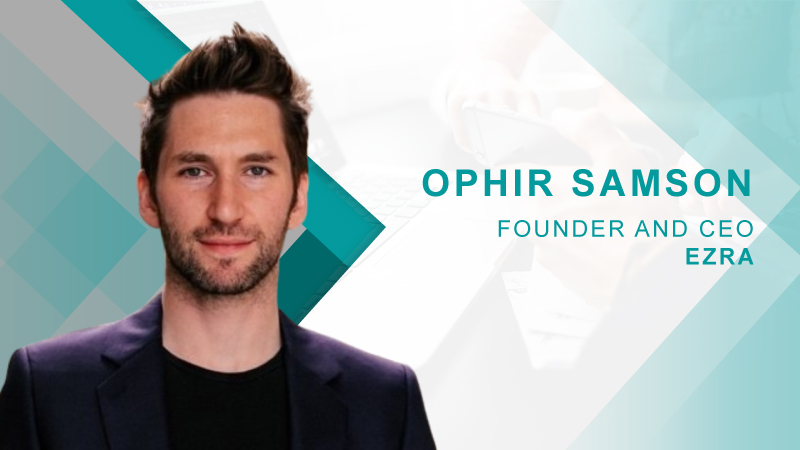
Ophir Samson, Founder and Chief Executive Officer, Ezra
Ophir Samson is the founder and CEO of Ezra, a voice AI interviewing platform. He combines deep technical expertise as a voice AI engineer with a decade of building teams and leading partnerships in autonomous driving at Aurora, business development at Uber, and generative AI at General Motors. He holds a PhD in Applied Mathematics from Imperial College London, was a researcher at MIT, and earned an MBA from Stanford Graduate School of Business.