

Welcome to HRTech Cube, Amandipp. We’re delighted to have you. Can you share your professional journey and what inspired you to found Enabled Talent?
My journey has been shaped by building technology while also navigating systems as someone with partial vision. Over the years, I worked across digital platforms, education, and employment programs, and I kept seeing capable people being filtered out not because they lacked skill, but because hiring systems were rigid and one size fits all. I have personally been blocked by application flows and assessments before a human ever looked at my work. Enabled Talent came from that frustration. I did not want to simply digitize broken processes. I wanted to rethink how opportunity is created so people are evaluated on what they can do, not on how well they fit outdated hiring norms.
You emphasize building inclusive systems “from the ground up.” How does this differ from simply retrofitting accessibility into existing processes?
When accessibility is added later, it usually means fixing problems after people have already been excluded. Building from the ground up forces you to question the assumptions behind the process itself. This includes how roles are defined, how candidates apply, and what is treated as a meaningful signal. When inclusion is part of the design from day one, the system works for more people by default. Inclusion is not what you write on a careers page. It is what your hiring process does to people in practice.
Technology is often criticized for amplifying bias. How is Enabled Talent using tech to specifically identify and remove barriers?
Technology can either hide bias or help reveal it. We focus on making barriers visible. We look at where candidates drop out of the process, which steps create friction, and how requirements filter people out. This helps employers see gaps they did not realize existed. On the candidate’s side, we give people better ways to show their skills beyond a traditional resume, which often reflects access and background more than real ability. The goal is to support better decisions, not to automate judgment.
What is the most common disconnect you see between a company’s inclusive intentions and the actual reality of their candidate experience?
Most leaders genuinely want to build inclusive workplaces. The disconnect is that their hiring process has not changed. The messaging says inclusive, but the experience tells a different story. Long job descriptions, rigid screening steps, and high pressure interviews signal who the process was built for. Candidates feel that gap very quickly. Inclusion lives in the process, not in the policy.
How can leaders shift their mindset from viewing accessibility as a compliance checkbox to a long-term strategic advantage?
That shift happens when leaders see results. When hiring processes work for more people, organizations reach a broader talent pool and often see stronger retention because people feel supported from the start. Over time, teams become stronger because they bring different perspectives and ways of working. Accessibility stops being treated as a requirement and becomes part of how leaders think about building resilient teams.
What are some common “hidden barriers” in standard job descriptions or portals that unintentionally filter out high-potential talent?
Hidden barriers often appear in long lists of must have requirements and unclear role expectations. Many strong candidates opt out because they do not match every item on paper, even when they can do the work well. On the portal side, complex application flows and rigid assessments favor people who are already comfortable with traditional hiring systems. These structures do not measure potential. They measure comfort with the process.
As AI reshapes HR, what safeguards are needed to ensure tools support neurodiverse candidates rather than hindering them?
Safeguards start with acknowledging that there is no single ideal candidate profile. Tools should be reviewed regularly to make sure they are not favoring one communication style or background. Teams also need to understand how these systems influence decisions. Most importantly, candidates should have more than one way to show their strengths. People communicate and perform differently, and hiring processes should reflect that reality.
Too many capable people are filtered out by systems that were never designed for them. When we change the system, we change who gets a fair chance.
On a personal level, what specific leadership strategy do you rely on to navigate challenges and keep your team focused?
I stay close to the people we are building for. When decisions become difficult, grounding the team in real user experiences helps us stay focused on what matters. It creates clarity when there are competing priorities and reminds us that our work has real impact on real people.
What is one piece of advice for HR leaders who want to improve inclusivity but feel overwhelmed by where to start?
Start with one change you can make this quarter. Rewrite one job description in plain language or adjust one interview step to be more flexible. Small changes build confidence and momentum. You do not need a perfect plan to begin making progress.
Finally, what closing thoughts or future trends in inclusive hiring should we be watching?
Hiring is moving toward a stronger focus on skills and real world capability rather than credentials alone. Organizations that design their hiring processes around how people actually work and communicate will attract stronger and more diverse talent. Over time, inclusive hiring will become part of what good hiring looks like, not a separate initiative.

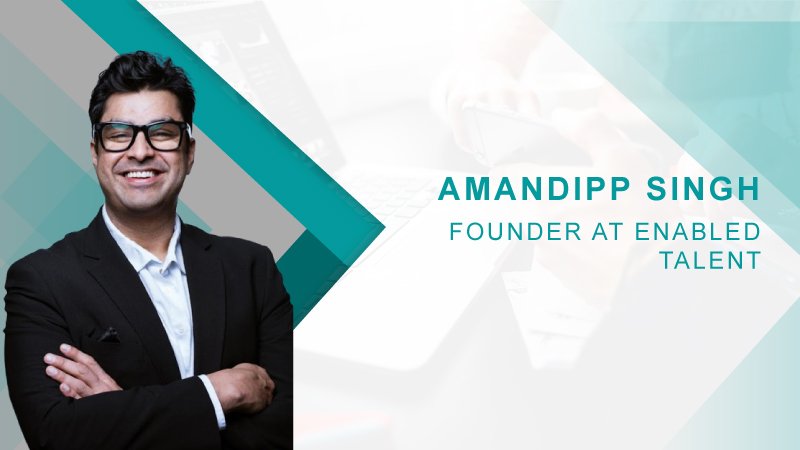
Amandipp Singh, Founder at Enabled Talent
Amandipp Singh is the Founder and CEO of Enabled Talent. He works at the intersection of technology, employment, and accessibility, with a focus on building hiring systems that work for people who are often overlooked by traditional processes. As someone with partial vision, his professional work is shaped by lived experience navigating education and employment systems that were not designed with accessibility in mind. He has spent years working with employers, nonprofits, and public sector partners to improve how organizations design hiring and onboarding experiences. His work centers on practical, people first approaches to inclusive employment.