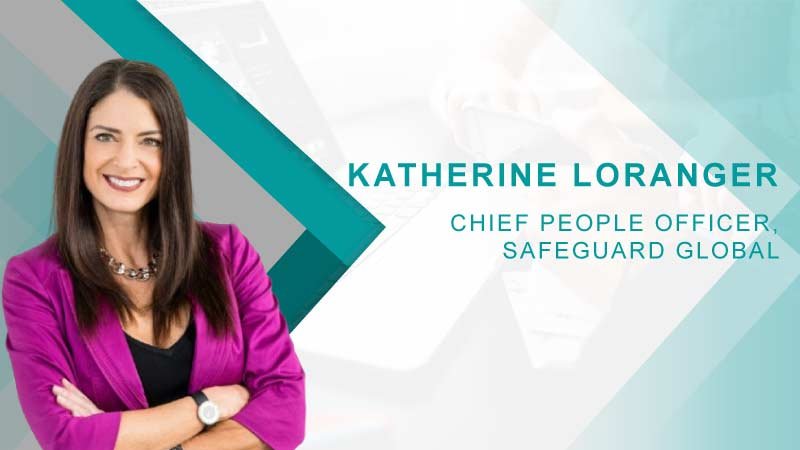
Katherine Loranger, before we step into the broader themes, how have your years leading people operations across more than 50 countries shaped the way you approach your role as Chief People Officer at Safeguard Global today?
Moving from a purely domestic environment into a truly global one forces you to drop assumptions very quickly. You realize how limited your perspective can be when you’re only bringing a viewpoint from one country or region. Working globally requires humility with an understanding that you don’t know everything, as well as a genuine openness to learning how work, culture, and expectations differ across borders. At the same time, it reinforces how much people actually have in common. If you watch and listen, it’s easy to see how shared values and motivations often outweigh cultural differences.
What realities of remote-first work often get overlooked when teams assume it simply means “work from anywhere”?
“Work from anywhere” sounds simple, but from an HR and compliance standpoint, it’s anything but. Even short-term work in another country can trigger tax, immigration, security, and data privacy issues. There are countries where employees cannot legally take company equipment or access systems. Remote-first work requires clear guardrails to protect employees, clients, and the business.
There’s also a performance expectation. Working remotely still means working. If availability or responsiveness change, the situation an employer is likely dealing with is more aligned with time off rather than remote work.
How do you maintain strong cultural alignment when employees operate across multiple borders, time zones, and local norms?
It starts with a strong core culture. You need clarity around who you are as a business and what you stand for. That foundation allows local teams to express culture in ways that fit their environment without losing alignment. Values like integrity, accountability, and respect translate across borders, even if they show up differently. Consistent global policies help provide guardrails, not rigid rules, so people understand how the organization approaches work while allowing space for local context.
What practices help managers sustain performance discipline without drifting into over-monitoring or excessive rigidity in distributed environments?
Most people want to do good work, and assuming positive intent goes a long way. Excessive monitoring of things like login times or online status breaks trust and breeds disengagement, which is exactly the challenge leaders are trying to avoid. Managers should anchor performance discipline in clear objectives and outcomes rather than surveillance. At the end of the day, what matters is whether people are available when needed, meeting deadlines, and delivering quality work. If performance slips, managers can adjust oversight appropriately.
How do you define career growth as a true joint effort between employees and the organization, rather than a one-sided expectation?
Career growth works best when both the employee and employer are involved. The organization should provide frameworks, tools, and coaching, but employees must take ownership of their development. Managers play a critical role by leading conversations about interests, strengths, and next steps. It’s always important to keep in mind that opportunities often go to people who raise their hand, seek feedback, and volunteer for stretch work. That initiative signals readiness far more than waiting for advancement opportunities that are neatly laid out in a job description.
What structures ensure that career pathways remain transparent, actionable, and rooted in accountability for both sides?
The employer’s responsibility is to outline expectations and provide access to development resources, while the employee’s responsibility is to act on that information and close the gaps between expectations and actual performance. The best way to bring those two paths together is through career frameworks. When competencies are defined, employees can see what skills or experience are required to reach the next level. Most people don’t know what they don’t know, so transparency removes ambiguity around questions like, “How do I advance to a senior level?” or “How can I use my existing skills to begin to pursue a new career track?”
When companies embrace EOR models at scale, what guidance do they frequently neglect that ends up creating operational blind spots?
Organizations often underestimate the importance of cultural integration and visibility. If EOR workers are treated separately from the broader organization in an administrative sense, they can unintentionally become an “invisible” workforce, meaning they are less present in core systems, reporting, and talent conversations. That lack of visibility can affect workforce planning, cost awareness, and engagement for the company. The strength of an Employer of Record (EOR) model lies in enabling globally hired employees to be just as visible and included as any other part of the workforce. EOR models work best when companies intentionally include those employees in their thinking about how to improve culture, performance, and long-term strategy.
How do you see AI reshaping people operations in a way that supports—not replaces—the judgment HR leaders need for global compliance?
AI is a powerful tool for analysis, documentation, and pattern recognition, but it should never make final decisions. Its value lies in reducing administrative burden so HR leaders can focus on judgment, context, and human connection. Compliance, employee relations, and talent decisions still require people while technology supports the work. There is no replacement for accountability or responsibility.
What patterns are emerging across your global client base that reveal where organizations tend to misjudge the complexity of managing talent internationally?
One of the biggest misjudgments is treating compliance as a one-time event. Hiring is just the beginning. Regulations change, markets evolve, and workforce needs shift. Organizations also tend to underestimate the risk of concentrating too much talent in a single country or region. When local labor markets tighten, wages rise, or regulatory costs increase, that concentration can quickly drive up expenses or lead to higher attrition as competition for talent intensifies. Global workforce decisions are ongoing and require continuous attention rather than a set-it-and-forget-it approach.
As remote-first continues to mature, what shifts must HR and business leaders prioritize to keep people experience, performance, and compliance moving in the same direction?
Leaders need to balance technology and human connection. Technology is excellent for delivering information quickly and reducing friction, but people are essential for building trust, culture, and engagement. Designing experiences that combine both ensures employees feel connected, supported, and accountable.
A quote or advice from the author
“Technology can handle the heavy lifting, but people still need people. That balance is where good HR leadership lives.”

Katherine Loranger, Chief People Officer, Safeguard Global
Katherine Loranger is Chief People Officer at Safeguard Global, where she leads global people strategy across a workforce spanning more than 50 countries. With deep experience in international HR, compliance, and remote-first operations, she focuses on building scalable people practices grounded in accountability, cultural alignment, and human judgment. Safeguard Global enables organizations to hire, manage, and pay talent anywhere in the world through integrated workforce solutions.