

Welcome to HRTech Cube, Fidelma. We’re delighted to have you. To begin, could you share your professional journey and what led you to founding and leading Payslip?
I’ve spent more than two decades scaling international businesses and leading global HR and IT teams, and during that time I saw the same challenge play out in every multinational: payroll operations were fragmented, inconsistent, and extremely hard to standardize across countries. Teams were working with different vendors, different systems, and different data structures, which meant they had limited visibility and very little control. It slowed growth, created risk, and put payroll professionals in an almost impossible position.
That experience was the catalyst for Payslip. I knew there had to be a better way to unify global payroll operations, centralize the data, and give organizations the level of standardization and oversight they needed. In 2016, I founded the company in Westport with the mission to bring control, integration, and automation AI to a function that had been underserved for far too long.
AI is reshaping payroll operations rapidly. From your perspective, what are the biggest benefits AI brings to payroll processes, and what challenges do organizations need to anticipate?
AI removes repetitive manual work, strengthens validation, and speeds up reconciliations. It identifies anomalies earlier and improves consistency across large, distributed operations. The main challenges sit upstream. Fragmented or inconsistently labelled data can lead AI to amplify errors. Organizations also need strong governance and clear expectations so outputs are properly reviewed and trustworthy.
Before introducing AI, you’ve emphasized the importance of standardizing and centralizing payroll data. Why is this foundational step essential for accuracy, trust, and successful automation?
A harmonized, centralized dataset creates a single source of truth. When every country, vendor, and system follows the same structures, accuracy improves and errors are easier to isolate. It prevents automation from acting on conflicting information and gives teams confidence in the outputs. Without it, AI simply accelerates existing inconsistencies.
Clean, structured data is often described as the “fuel” for AI. How does high-quality data enable predictive analytics, anomaly detection, and more advanced payroll insights?
Predictive analytics depends on standardized fields and consistent categorization to forecast costs, understand trends, and detect risk. Clean inputs ultimately mean greater accuracy. And from there you can unlock richer insights around overtime, for example, or absenteeism. You can better understand the cost drivers and make a more meaningful contribution to workforce planning.
How directly does the success of AI in payroll depend on data integrity and standardization across systems, countries, and teams?
Its success is tightly linked to how unified the data model is. If structures vary between systems or countries, the model cannot compare like-for-like and its outputs become unreliable. Standardization ensures anomalies stand out clearly, which makes pattern recognition more accurate and scalable.
In your view, what is the real, tangible value AI delivers in payroll today, particularly when it comes to reconciliation, data validation, and integration across global payroll environments?
AI shortens reconciliation cycles by automatically flagging mismatches and unusual movements. It validates inputs continuously and catches issues before they reach cut-off. It also improves integration across HCM, time, and local payroll vendors by aligning fields and identifying gaps early. Teams spend less time on administrative checks and more time addressing genuine exceptions.
Payroll is increasingly shifting from a transactional back-office function to a strategic capability. What forces are driving this evolution, and how can AI accelerate that transformation?
Global expansion, rising workforce complexity, and higher expectations from finance and HR have pushed payroll into a more strategic role. Leadership wants real-time visibility into pay costs, productivity indicators, and risk exposure. AI accelerates this shift by generating insights automatically and reducing the processing burden, making payroll intelligence easier to access and act on.
AI can’t compensate for poor foundations. Get your data structured and standardized, then you can reap the benefits.
The human factor remains critical in payroll. How do you see AI supporting, rather than replacing, payroll professionals, especially when centralized data and intelligent tools are introduced?
AI handles repetitive checks and highlights issues early, which frees professionals to focus on interpretation, stakeholder engagement, and problem solving. Human judgment is still essential for context, nuance, and trust. With better tools and centralized data, payroll teams can move into more advisory and analytical roles. At Payslip, we firmly believe that technology only enables changes, but it’s people who must drive it.
As payroll teams begin using data more strategically, what steps should they take to turn their information into actionable intelligence that benefits the broader organization?
Teams should establish consistent categorization, adopt dashboards that track trends, and tie insights directly to business objectives such as cost control or headcount planning. They should also work closely with HR, finance, and operations to ensure insights influence real decisions. The value comes from connecting payroll data to outcomes the business cares about.
Transparency and explainability are major concerns in AI-driven decision-making. Why are these principles especially vital in the context of payroll, where accuracy and trust are paramount?
Payroll affects every employee and every financial control. Any flagged anomaly or recommended action must be traceable, auditable, and easy to understand. Explainable AI helps teams see why something is being flagged and supports compliance reviews. Clear reasoning behind outputs helps prevent disputes and maintains trust across the organization. With more AI-focused legislation coming into effect over the next few years it will be paramount that any decision you might make regarding an employee which has been AI-assisted can be explained, either to the employee themselves or an auditor.
Tools like Payslip Alpha are redefining payroll AI and automation. What innovations do you think will drive the next phase of intelligent payroll, and what frameworks must companies adopt to ensure responsible implementation and protect against bias or errors?
The next phase will be defined by automated validation, unified global data, and tools that contextualize and solve anomalies rather than just spotting them. That is what we are building with Payslip Alpha. The impact on our customers is already clear. For example, one feature, PayrunIQ, can surface insights and flag possible anomalies in seconds. Information that might take a payroll analyst an hour to find. To implement these kinds of AI features responsibly, companies need firm data governance, transparent models, documented controls, and continuous monitoring to catch bias or drift.
Before we close, what advice would you give to leaders preparing their payroll operations for AI adoption, and do you have any final thoughts on the future of AI-enabled payroll?
Start with data fundamentals. Map your data sources, align your structures, and clean what you already have. The initial work that Payslip does with our customers during onboarding is all about building that bedrock of validated, standardized data to start working from. The future of payroll will pair intelligent automation with skilled professionals who understand how to turn insight into business value. AI will raise expectations for accuracy, speed, and transparency, and teams that invest in data foundations now will be the ones who benefit most in the long-term.

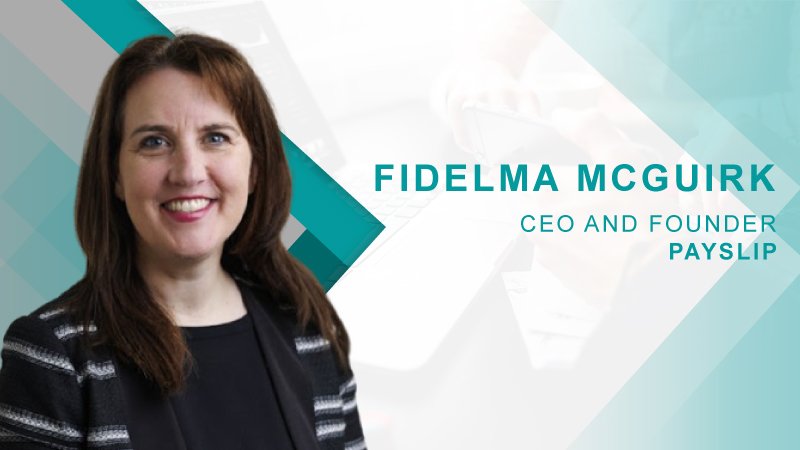
Fidelma McGuirk, CEO of Payslip
Fidelma McGuirk is the CEO and founder of Payslip, a technology company delivering payroll control, integration and automation AI.
With 20+ years’ experience scaling international business and leading multinational teams across global HR & IT functions, McGuirk identified the need for a technology solution to help multinational employers standardize and centrally manage their global payroll.
Payslip was founded in Westport, Ireland in 2016 and now has offices in Dublin, Bulgaria and Spain, serving a global customer base.