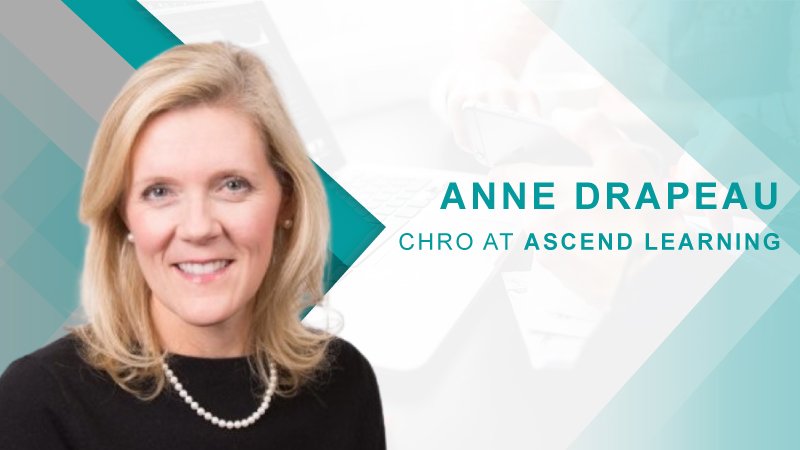
Welcome to HRTech Cube, Anne — we’re delighted to have you. To start, could you share a brief look into your professional journey and what ultimately led you to your current role as Chief Human Resources Officer at Ascend Learning?
I came to HR because I’ve always believed that talent and culture are powerful competitive advantages—and that belief has shaped every step of my career.
I spent the first 10 years or so of my career in Finance and Strategy roles. In the early days of my career, I was lucky to work for companies that were really progressive in how they thought about investing in talent. Seeing firsthand how strong talent strategies drove performance made a lasting impact on me. I always believed great HR was a huge competitive advantage, and I developed a passion for building cultures focused on bringing in great talent and enabling them to do amazing things.
A previous boss recognized that passion and encouraged me to take a rotation in a senior HR role. I thought it was a crazy idea at the time, and that I wasn’t at all qualified for that job, but thankfully, he saw things in me that I didn’t necessarily see in myself. That experience fundamentally changed my trajectory, and I’ve been in CHRO roles ever since.
Ascend was especially compelling to me for many reasons – I was inspired when I met the CEO, and I love the purpose and mission of this company. Enabling the success of health care workers is something that I, and all my colleagues at Ascend, are proud of and believe is so critically important.
At Ascend, you emphasize building and empowering leaders as coaches. How do you help leaders shift from day-to-day management toward deeper, more meaningful connection with their teams?
We believe the primary role of managers and leaders is to enable the success of the company by enabling the success of our people. That means we need to really know our people. This requires going well beyond delivering great reviews or report cards. It means we need to understand our team members’ strengths, what gives them energy, how they best receive and respond to feedback. We should understand their aspirations. And our leaders should celebrate learning from failure. We expect this of all our people managers.
What practices or frameworks do you use to help leaders identify strengths, passions, and untapped potential within their people?
This largely boils down to curiosity. To invest the time to get to know people. To ask them about what’s important. To ask why people approach their work the way they do. One exercise I like to do with teams is to ask everyone to share a bio highlighting their personal values and a “how to work with me” overview. It’s a great way to build a true connection and to signal that it’s not only okay, but also imperative, that we learn how to work best with one another.
I’m also a huge proponent of challenging stretch assignments, with appropriate scaffolding to ensure learning and growth. I suspect most of us have learned more from assignments that terrified us than from training classes we’ve attended.
Your people-first leadership philosophy prioritizes environments where employees can thrive. How does Ascend foster a sense of purpose and connection to the company’s mission across all levels?
Our mission is front and center, and it helps that every one of us has had meaningful experiences in our lives with the professionals we serve. As a large proportion of our employees have worked in the healthcare space, there is a lot of built-in empathy and passion for the work we do. We also engage customers in our Town Hall meetings and in other employee events so that each of us, no matter where we sit in the organization, can hear about the impact of our work.
Continuous learning is a core part of our Ascend culture. Can you share how the organization encourages curiosity and professional growth, especially as roles evolve over time?
We have a number of formal programs in place that ensure our people continue to grow as leaders and practitioners. Our internal programs tend to focus on developing leadership skills and business acumen, and we strongly encourage employees to participate in a range of programs that enable them to hone their craft. We expect everyone at Ascend to be thinking about how our industry is changing and about the impact of technology. As an example, we are launching a program with a cohort of mid-level managers, encouraging them to develop their most creative and breakthrough ideas on how AI can enhance our internal and customer-facing operations. Our industry, like most, is changing rapidly. Employers need to invest in opportunities for their people to stay ahead of those changes.
How do you inspire employees to stretch into new opportunities and build career paths that align both with their aspirations and the organization’s long-term goals?
Great question. I believe there are 3 key things we must do:
- Hire people who are deeply curious and are motivated by impact. They will naturally seek out or create opportunities to learn and contribute.
- Understand their aspirations. Be careful not to project your own aspirations onto others. Really take the time to get to know them.
- Regularly map long term goals to talent strategies. Spend the time to understand how the organization’s capabilities need to develop or evolve to ensure the organization can deliver on its strategy. And then be incredibly transparent about what people need to demonstrate and deliver. Don’t overpromise about the opportunities that are available to people.
Change is inevitable, but how leaders navigate it makes all the difference. What strategies has Ascend found most effective for maintaining clarity, empathy, and resilience during times of transition?
It may seem obvious, but the best approach is to communicate, communicate, communicate. In large groups, small groups and 1:1. By the time a change is rolled out to an organization, most leaders are tired of talking about it. But we need to remember others are just embarking on the change curve. Acknowledge people’s feelings and know when to move on and focus on the new.
From your perspective, what role does intentional communication play in helping teams stay grounded and aligned through organizational change?
Intentional communication is critically important. Many organizations focus a lot on scripts and broadcast communication, and it’s certainly helpful to ensure that messages are aligned and accurate. But true communication isn’t one-sided. It’s a dialogue. We need opportunities to hear from employees – we use surveys, focus groups, and broad outreach.
On a personal level, what strategy or approach has been most impactful in your own leadership journey when it comes to empowering people and shaping culture?
I had an experience earlier in my leadership journey that deeply impacted me. Early in my career, I was tagged as an insufferable micromanager. It was my way of coping with imposter syndrome; if I was always in the weeds, I would feel like I was making a contribution. When I began preparing for my first parental leave after the birth of my daughter, it was then that I discovered my team was doing great without me. I realized leadership wasn’t about me, but it was about amplifying the success of my amazing team. If I gave people the space to think, take risks and build confidence, they would thrive. This idea has informed me of my approach ever since. I believe we must surround ourselves with people who are better than we are, encourage them, challenge them, and allow them to soar.
Finally, what closing thoughts or advice would you like to share with our readers—especially those striving to build people-first organizations and develop leaders who inspire growth?
I’ll offer 3 key pieces of advice:
- The best leaders know how to lead people who are in jobs they themselves don’t know how to do. Find ways to give leaders those experiences so that they focus less on delegation and micromanagement, and more on smart questions and enablement
- Invest in really knowing your people – what excites them, what drains them, their aspirations and their values
- Encourage risk-taking, failure (with learning and correction) and vulnerability

Anne Drapeau Chief Human Resources Officer at Ascend Learning
Annie Drapeau is Ascend's chief human resources officer, renowned for aligning people strategies with enterprise goals and fostering a culture of growth and leadership. With over 30 years of experience in executive roles across human resources, strategy, and finance, Annie has held leadership positions at prominent organizations such as Bain Capital, Toast, Moderna, and Iron Mountain. Her career spans fast-paced tech startups to global public companies, where she has played pivotal roles in IPO preparations, CEO transitions, and international expansions.
Most recently, Annie served as chief people officer at Toast, a leading restaurant technology company, and Moderna, where she helped scale the business across multiple clinical-stage programs. She also contributed to talent strategies as an operating partner at Bain Capital. Annie began her career in finance and strategy at JP Morgan and PepsiCo.
In addition to her corporate roles, Annie is actively involved in governance and advisory capacities. She is the chair of the board of trustees at Bucknell University and a member of the Posse Foundation National Board. She also serves on the Board of Directors of Vaxcyte, where she chairs the compensation committee. Her previous board service includes the Nashoba Brooks School in Concord, MA.
Annie is also an accomplished author and thought leader, having co-authored "The Trusted Leader" and contributed to the Harvard Business Review on topics of leadership and organizational trust.