A changing workplace.
Work is accelerating faster than most organizations can absorb knowledge. Tools evolve, roles expand, expectations rise—yet time, focus, and learning capacity keep shrinking.
The TalentLMS 2026 Annual L&D Benchmark Report captures the imbalance: 65% of employees say performance expectations have risen, while lack of time remains the biggest barrier to learning.
But the most important part is not the statistics. It is what they reveal.
This is primarily a leadership and culture problem. Organizations claim they want long-term value creation, but their day-to-day behavior rewards short-term wins. And continuous learning—done efficiently and effectively—is what makes long-term value creation possible.
When learning keeps losing, capability quietly erodes
In many companies, learning is still something people do “around” work. It competes with deadlines, meetings, and the constant pressure to deliver. This is not because people don’t want to grow. It is because the organization signals—explicitly or implicitly—that learning is not real work.
That signal is amplified by a familiar leadership failure mode: metric myopia. When leaders measure only what is immediate and visible—throughput, short-term output, activity, utilization—learning becomes invisible by definition. People then behave rationally: they optimize for what gets measured, rewarded, and noticed.
The TalentLMS report reflects this tension. More than half of employees say workloads leave too little room for training, and many agree their organization still views training as time away from “real work.”
In that environment, the organization may still ship. It may even hit quarterly goals. But it accumulates Learning Debt: the gap between the skills and understanding the business needs and what the organization actually has. That debt compounds through rework, repeated mistakes, fragile processes, and dependency on a few “heroes” who carry tacit knowledge in their heads.
The future of workplace learning: AI-powered continuous learning systems
Here is the shift that matters: learning has already moved into the flow of work—whether we designed for it or not.
People learn by solving problems in real time, under pressure, with imperfect information. Work is the fastest learning engine any company has.
What has been missing is a reliable way to keep what is learned—to retain it, structure it, reuse it, and improve it over time.
This is where AI becomes a co-driver.
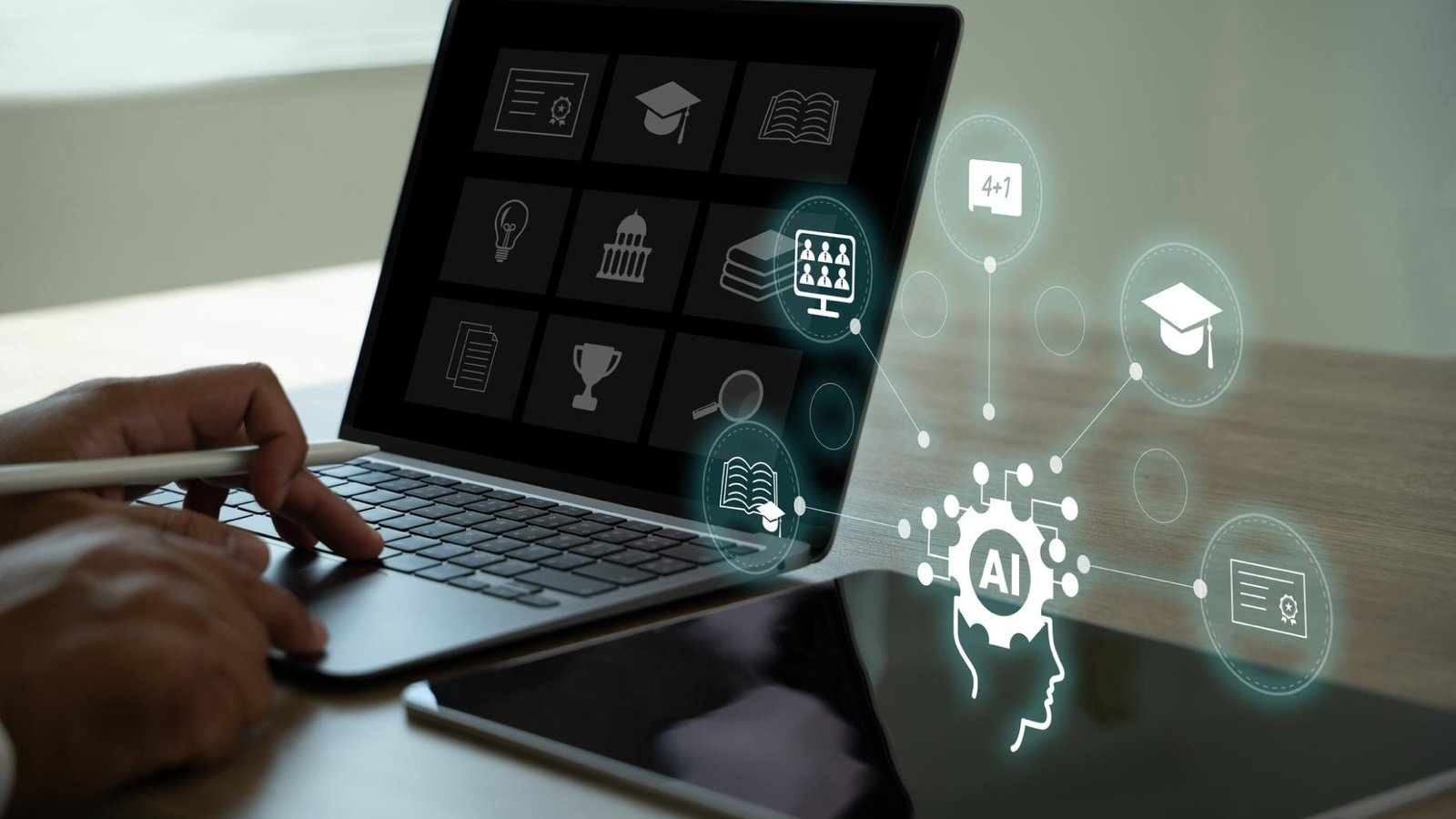
As the TalentLMS report describes, AI is beginning to support a move from “AI co-learning” to “self-perpetuating learning systems.” The idea is straightforward: as AI observes how teams plan, solve problems, and make decisions, it can help capture patterns and lessons that previously disappeared through handoffs, silos, and turnover. Everyday work can feed a shared, evolving knowledge base.
When done well, the role of L&D shifts. Less time is spent manually producing static content. More time is spent designing an ecosystem that keeps knowledge circulating.
But there is a crucial boundary: AI should serve and support human beings in making strategic decisions—not make strategic decisions itself.
Humans must own the WHY. The WHAT and the HOW will increasingly be supported by AI.
Practical steps for organizations to turn work into a learning system
This future does not require a big-bang transformation. It requires a change in the operating system: from training as an event to learning as infrastructure. Five practical steps can get organizations moving immediately.
1. Fix the measurement problem first
If metric myopia is the root cause, the first intervention is rethinking how learning is measured.
Most learning measurement is activity-based: hours trained, courses completed, attendance, satisfaction. These are important, but they are part of a bigger picture. They do not show whether organizational capability is actually improving.
A better approach is “innovation accounting” and actionable metrics in the Lean Startup sense: measure learning as validated progress, focused on what improves in real work, not just activity. The most important metric for any company today is the increase in its knowledge about the problem it is solving. For L&D leaders, this reframes measurement as evidence that learning is improving decision-making and reducing uncertainty.
That will look different across industries, but leadership needs a weekly, operational way to test whether learning is translating into reality. Two practical proxies are:
- How frictionless new sales are becoming (sales cycles, conversion rates, objections, implementation friction).
- How stable and strong user engagement and service consumption remain (usage depth, adoption, retention, expansion signals).
These are outcome-level signals, but they are useful precisely because they give L&D leaders a credible way to connect learning to better decisions and real business impact.
2. Turn existing knowledge into training before it disappears
Most organizations already have valuable knowledge scattered across SOPs, playbooks, onboarding docs, retrospectives, and internal threads. Convert the best of it into short, scenario-based learning units and decision guides.
The goal is not content volume. The goal is organizational memory.
3. Build learning at the speed of work with human oversight
AI can draft microlearning, scenarios, and assessments quickly. But speed only matters if trust holds.
Use AI to accelerate first drafts, and assign clear human owners to validate accuracy, context, and relevance. Keep reviews lightweight where risk is low, and stricter where the stakes are higher.
4. Make skills the organizing system
Courses are not a strategy. Skills are.
Connect learning assets—formal and informal—to a skills framework that is small enough to be usable. When skills become the map, employees know what to learn next, managers coach consistently, and leaders can see capability gaps clearly.
5. Put governance around judgment, especially in people decisions
The one non-negotiable rule is this: all people-management decisions—hiring, firing, promoting, compensation—must be made by human beings. AI may provide supporting data, including signals from learning and performance, but it cannot be the decision-maker. Equally non-delegable is ownership of policy, ethics, and risk: when something goes wrong, accountability must remain human and explicit.
This is not only a moral boundary. It is also a leadership boundary. Organizations outsource judgment at their own risk.
Learning is not a break from work. It is how work improves
The problem is not that employees don’t care about development. The problem is that leaders often measure the wrong things, reward the wrong outcomes, and unintentionally train the organization to sacrifice long-term capability for short-term output.
AI can help—dramatically. But only if it is used to redesign how knowledge moves: work creating learning, learning improving work, and organizational knowledge compounding over time.
If you want a workforce that can move fast, you need a learning system that moves faster.
And that requires leadership that measures learning as value creation—not as time away from “real work.”
Explore HRTech News for the latest Tech Trends in Human Resources Technology